




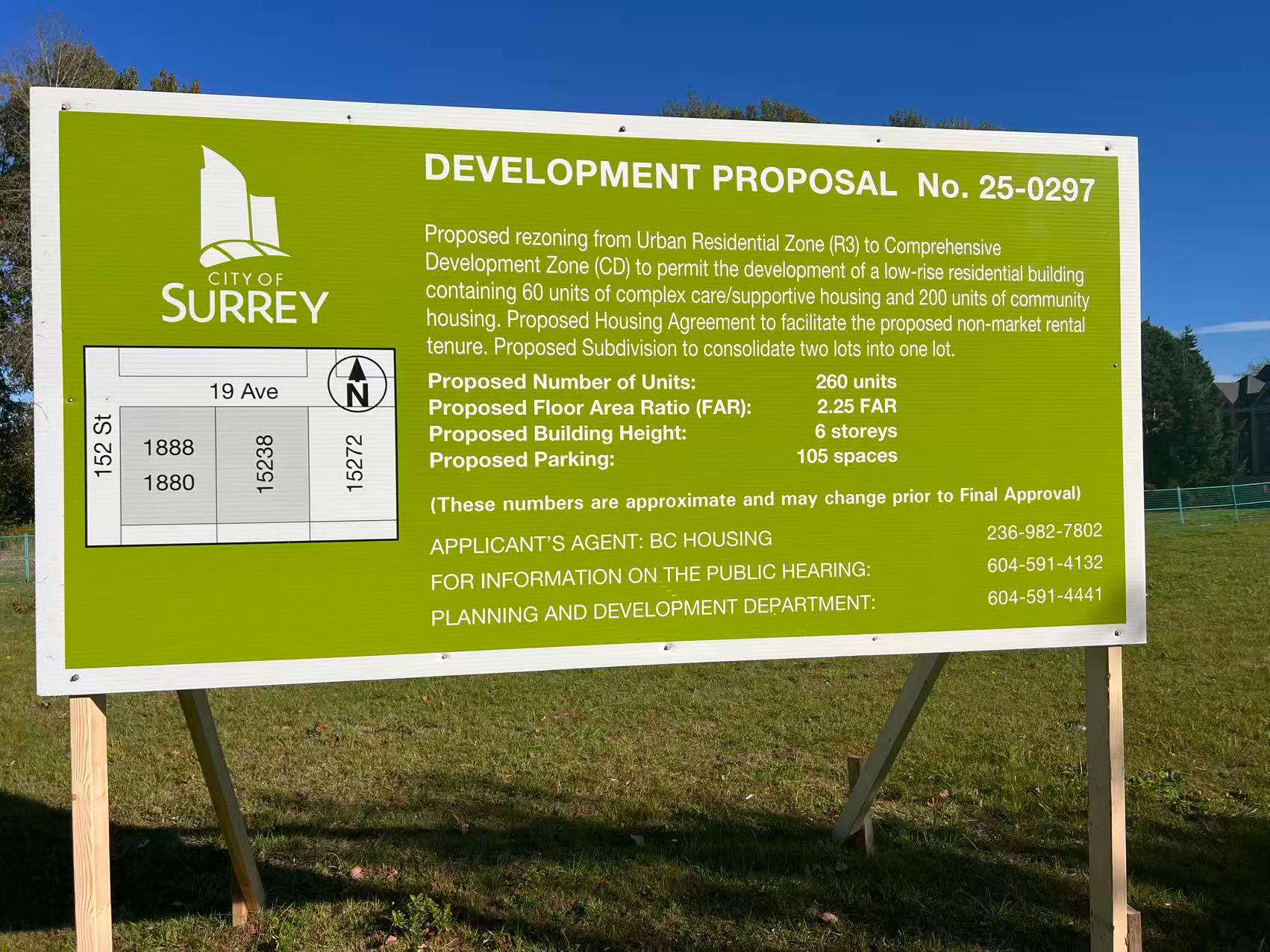
Imagine your city wants to build a huge new apartment building — kind of like a neighborhood upgrade — with 260 homes inside. That’s what was planned in South Surrey. The building would have three types of homes:
- 200 affordable homes: For people who work hard but can’t afford super-high rent.
- 40 supportive-housing homes: For people who don’t have a stable place to live and need some help getting back on track.
- 20 complex-care homes: For people who need doctors, nurses, or support workers checking in often.

The big goal was to help people who might be struggling — kind of like giving them a safe, warm “restart button” in life.

❌ Why Did Many Local People and the City Council Say “No” to It?

Even though the idea sounded helpful, lots of people in the neighbourhood felt worried — kind of like when someone suggests putting a giant roller coaster next to your school and you’re not sure how it will turn out.
- The planned building was right beside:
- 🏫 Schools
- 📚 A library
- ⚽ Parks and sports fields
- 🏡 Family homes
People were nervous about things like:
- Safety
- More noise
- Litter
- People struggling with addictions being nearby
- The neighbourhood “feeling” different
Even though many people agreed that affordable housing is important, there was one huge issue that made a lot of neighbor’s and parents anxious. The proposed building wasn’t just regular housing — it included “complex-care” support, which means it would help people who struggle with very serious health challenges, including addiction. Some of the planned services might have included harm-reduction supports, which can involve helping people stay safe while they deal with drug use.
What the community worried about:
- The housing site was close to schools and places where kids routinely hang out.
- Parents were worried that the area might attract drug dealers or people actively using drugs.
- They feared this could lead to unsafe situations near playgrounds, school routes, and neighbourhood streets.
- They were also concerned about kids seeing drug use, becoming curious, or being put in situations that could make them more vulnerable.
- Some believed the neighbourhood was being asked to share too much of the risk, even if the goal of helping people was good.
Another big problem: Many neighbours said they weren’t asked what they thought. It felt like someone planned a giant birthday party in their backyard… without telling them.
Because of these concerns, the city council voted not to support the plan. The fears were strong, loud, and widespread — especially from parents, influencing the Surrey council to not support the project, saying the location was not the right fit.
💬 What Do Different People Say and Feel About the Decision?
People reacted very differently — like when half your class loves a new school rule and the other half groans.
Some people felt relieved.
They didn’t think the location was right. They wanted kids, parks, and schools to stay separate from complex-care housing.
Others felt sad or frustrated.
They believed the project could help people who are homeless or struggling, and rejecting it means those people have fewer options. They argued that supportive housing can actually reduce street disorder, not increase it, because people get help inside a stable building instead of being outside with no support.
Petitions went around, meetings got crowded, and when the council said “no,” some people even cheered. Meanwhile, supporters of the housing walked out feeling disappointed.
🏥 Why Was Such Housing Proposed in the First Place — and Why Does the Region Care?
Cities like Surrey are growing super fast but the problem is: there aren’t enough homes for everyone.
Some people:
- Can’t afford rent
- Have health challenges
- Are sleeping in shelters
- Need help from nurses or counsellors
- Want a safe place to start fresh
Supportive and complex-care housing tries to help by giving people not just a home, but also the support teams they need — all in one place.
That’s why the agencies proposed it: to help people who need extra care and to build more affordable homes.
🔄 What Happens Now — Could Things Change Later?
Since the council voted “no,” the original project won’t move forward as-is. The city asked BC Housing to go back and rethink the plan.
That means things like:
- Maybe moving the complex-care part somewhere else
- Doing more public meetings
- Adding different safety plans
- Or redesigning the project
So it’s not “game over,” more like “restart level and try again.”
🌱 What This Story Teaches Us
- Housing decisions affect everyone, from kids to grandparents.
- A plan can be helpful — but still not fit in the right spot.
- Talking and listening (yes, even the boring meetings!) are important so neighbours feel included.
- People who are struggling need homes too — and communities need to decide how and where to help them.



Very nicely presented.
The only information that should have been included is the other complex care facilities in BC and how none of them have been considered successful. People from those neighbourhoods are very upset at the increased drug activity and crimes in their areas. Unfortunately two people supervising is not enough to keep the residents following the rules.
Great reporting job otherwise. I think a newspaper for younger people is a fantastic idea! Well done.
Thank you for the detailed feedback. You’ve raised important point about the experiences and lack of success, in other similar complex care facilities, and I appreciate you adding that context. I’ll keep this in mind for future coverage. I’m also glad to hear you liked the overall reporting and the idea behind the publication. Thanks again for taking the time to comment.
Very well written and articulate.
Thank you for the generous feedback. I appreciate you taking the time to read and share your thoughts.